Products Services References Knowledge base About us Contact
PL EN DE
Choose your case

Photovoltaics for business and industry. Savings, independence and a competitive edge.

More and more companies are investing in their own photovoltaic installation. Cut your bills, use free energy from the sun during peak demand hours and secure your production processes. The installation works for decades, generating steady savings and a fast return on investment.

Get a free quote

Photovoltaics for your home. Energy independence from day one.

Electricity prices keep rising, but you can protect yourself against it. Your own installation frees your home from energy suppliers and delivers real savings for decades. An investment that pays back every day, together with the sun.

Get a free quote
Our offer

End result
Why it's worth it

Subsidies

Photovoltaics that are even more cost-effective.

Government programmes let you significantly reduce the cost of buying and installing the system. We will guide you through the whole application process.

Mój Prąd programme
up to 50%
Non-repayable grant
Co-financing of eligible costs, not only for panels but also for energy storage and heat storage.
3 programmes
To combine
Mój Prąd, Czyste Powietrze and the thermal modernisation tax relief, which can be combined with each other.
MPL support
We handle the paperwork
You invest less, save more and enjoy your home's energy independence sooner.
  • Mój Prąd, a grant for panels and energy storage
  • Czyste Powietrze, support for comprehensive modernisation
  • Thermal modernisation tax relief, a deduction from your tax
  • Help preparing and submitting applications
Return on investment and ESG

Real financial gain and a competitive edge.

Photovoltaics for business is not a cost but an investment that lowers operating expenses and strengthens your market position.

Installation economics
25–30 years
Installation lifespan
Low running costs and a long lifespan. The installation pays back quickly and then generates clean profit.
Self-consumption
The key to profitability
Under net-billing, what counts is the ongoing use of your own energy. BESS storage and an EMS system maximise self-consumption.
ESG
Support for your sustainability strategy
Using renewable energy has a positive impact on your brand image and opens up new business opportunities.
  • ESG reporting and achieving environmental targets
  • An advantage in tenders and cooperation with corporations
  • Easier access to green financing
  • Decarbonisation and a real reduction of CO₂ emissions
Let's size your installation Free analysis and an individual quote, with no obligations.
Our projects

Installations across Poland.

From home micro-installations, through photovoltaics on hall roofs, to photovoltaic carports with energy storage, examples of projects delivered by our team.

Industry / Airport

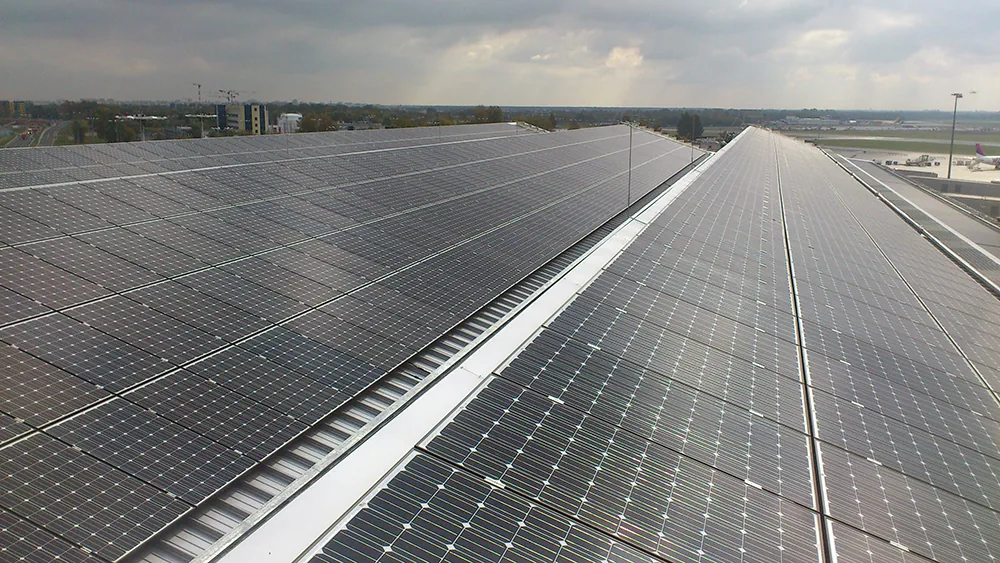
800 kWp photovoltaics, Terminal T1 Chopin Airport

Warsaw

An 800 kWp rooftop power plant supplying Terminal T1, with DC isolators on every module and a snow-melting function. Delivered for Hochtief Polska, end user: Polish Airports (PPL).

Capacity800 kWp
ContractorHochtief Polska
Project
Photo coming soon
Business / Carport + BESS

Photovoltaic carport with BESS storage

Silesia

A photovoltaic carport with industrial BESS energy storage and an EMS energy management system, for cost and process stability.

Facility typeGround-mounted carport
StorageBESS + EMS
Project
Photo coming soon
Single-family home

PV installation with energy storage

Silesia

A complete photovoltaic installation with a Solplanet hybrid inverter and LiFePO4 energy storage, sized to the home's annual consumption.

InverterSolplanet
StorageLiFePO4
01 / 03
Frequently asked questions

Everything worth knowing before you invest in photovoltaics.

How much does a photovoltaic installation cost?

The price depends on the installation capacity, the type of panels and inverter, the roof type and whether it works with energy storage. A typical home installation of 6–10 kWp costs from around PLN 25,000 to 50,000 gross.

After the Mój Prąd grant and the thermal modernisation tax relief, the net cost can be significantly lower. For a business we prepare the quote individually based on the consumption profile.

How long does the installation take?

Installing a typical single-family home system takes 1–2 working days. The whole process from contract to commissioning takes on average 4–6 weeks, including design, DSO approvals and fitting a bi-directional meter.

Industrial installations above 50 kWp are delivered in 6–12 weeks, depending on the scope and structure.

Are permits required?

For micro-installations up to 50 kWp a notification to the OSD is enough, no building permit is required. We handle the entire formal process.

For installations above 50 kWp additional industry approvals are required, which our design department takes care of.

How long is the warranty?

Solplanet inverters and energy storage come with a 10-year manufacturer warranty. Panels have 12–15 years of product warranty and 25–30 years of performance warranty.

The installation warranty is 5 years, extendable. Industrial BESS storage: 5 years, extendable to 10 years.

What is net-billing?

Net-billing is the settlement system in force in Poland since 1 April 2022 for new prosumers. Energy fed into the grid is sold at the exchange price (RCE) and energy bought from it is paid at the tariff price.

To make the system as profitable as possible, it is key to maximise self-consumption, hence the growing popularity of energy storage and EMS systems.

Does photovoltaics work in winter?

Yes, the installation works all year round. Panels produce energy even under cloud cover and in low temperatures (in winter the cell efficiency can even be higher).

Typically the installation produces around 20–30% of its annual yield in winter and 50–60% in summer. Over the year, production covers consumption with room to spare.

How long does a PV installation last?

The lifespan of panels is typically 25–30 years, with a warranty of at least 80–87% of power retained after 25 years. Inverters last around 10–15 years.

LiFePO4 storage, at least 6000 cycles (~15–20 years). In practice the investment pays back in 5–10 years and then generates clean profit for another 15–20 years.